Before the lights go down
How to watch flamenco
A first-timer's guide to flamenco: the three elements, the clapping, the palos you may hear and how to follow a one-hour show without knowing Spanish.
Reserve your seat ↗Quick answer
Flamenco has three parts: cante (singing), baile (dancing) and toque (guitar), while clapping and stamping feed the rhythm. Watch how the performers reply to each other instead of waiting for a tune. Spanish is optional and so is knowing the palos, since the show can be followed by eye and ear alone.
Three elements, one conversation
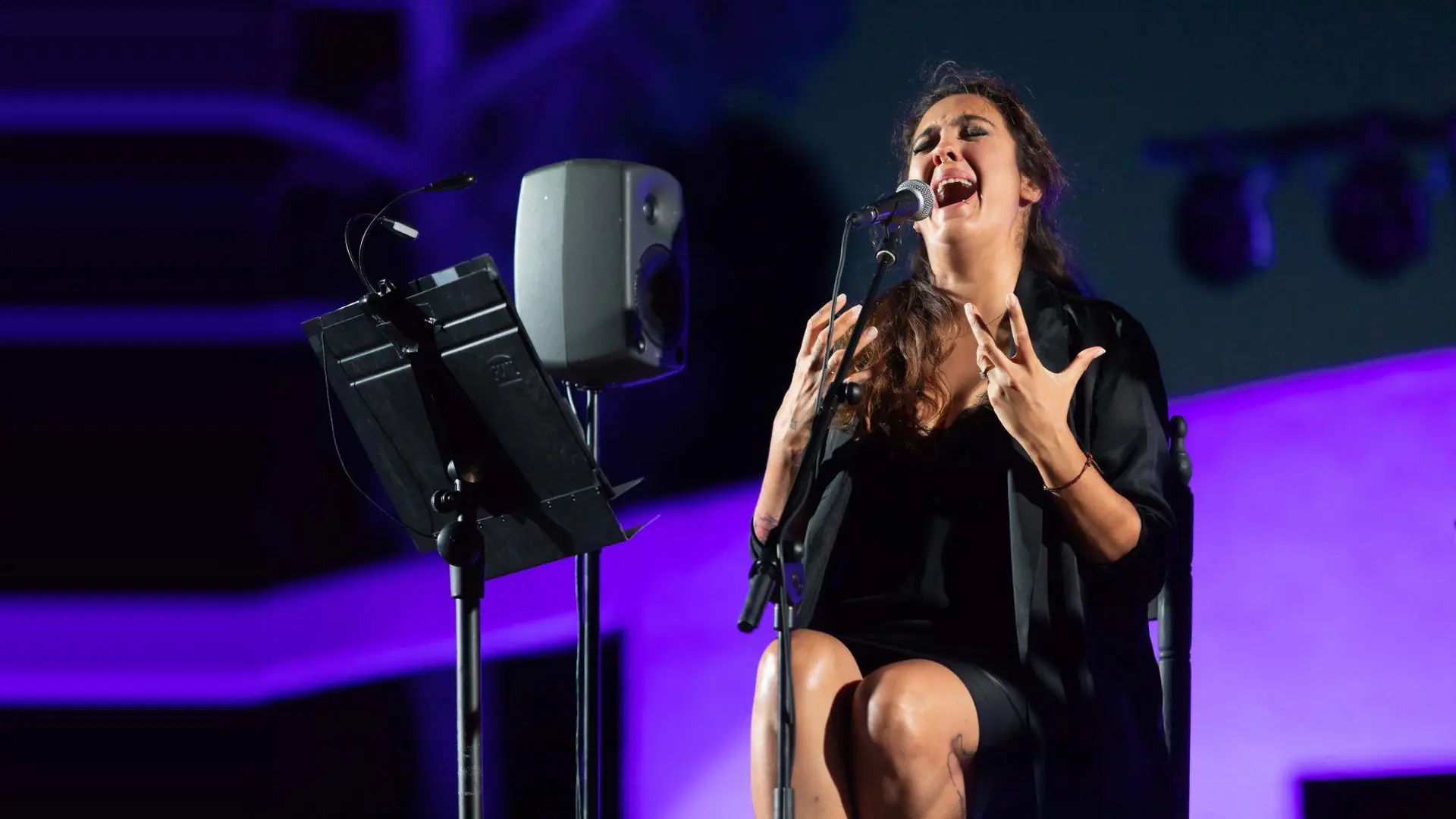
UNESCO's entry on flamenco describes it as a blend of singing (cante), dancing (baile) and playing (toque). The guitar, it adds, has outgrown a purely supporting role, and castanets, clapping and stamping join in. In a live show those elements trade the lead. A singer opens, a dancer answers, the guitar picks up the rhythm. Think of it as a conversation, not a set of separate acts.
The singing
UNESCO adds that both men and women sing, normally seated and without a chorus, to short and simple words. The sound can be raw, and the first minutes can feel unfamiliar if you expect a smooth pop voice. Flamenco singing is built on strain and release. Listen for how the singer holds a note and lets it fall, and for the guitar leaving room for the voice. That is normal. Most first-time audiences settle into it within the first few pieces.
The dance
The dancer is not performing to a recorded track. The rhythm comes from the guitar and the clapping, and the feet add another layer, striking the floor in patterns that answer the music. Because the show is live, the dancer can respond to the singer, and a good performance often feels as if it could go a different way each night. The venue's own blog describes live flamenco as a dialogue between singer, dancer and guitarist, in which listening and improvisation help the artists share one musical language.
The rhythm: palmas and compás
Flamenco is organised in a rhythmic cycle called a compás. In the soleá family the cycle runs to twelve beats, and in the tangos family it runs to four, as Wikipedia's article on the palos explains. The clapping, called palmas, marks the cycle, and you can often hear where it begins again. Counting is optional. Tap along with the claps and the pulse appears within a minute.
Palos: the forms you may hear
Palos are the named flamenco forms, and Wikipedia puts their number above fifty. Palos are grouped by mood into the deepest and most serious, a lighter group and an intermediate one. The soleá and the siguiriya belong to the deep group. The tangos are lively, and the granaína is slow and tied to Granada. A show chooses its own mix, so treat any list as a field guide to listening and not as a running order.
Read next: Flamenco show in Granada
What to do while you watch
Keep your phone away unless the venue allows photos, stay quiet while the artists play and applaud when a piece ends or when a moment lands. If something moves you, that is enough. The one-hour show passes quickly, so give it your attention from the first note. If you have a drink, sip it between pieces and not during a quiet passage, because glasses and chairs are loud in a quiet room.
Who this isn't for
Flamenco is not background music. If you want a dinner with a pleasant soundtrack, or a show with a story and subtitles, choose a different night. A flamenco performance asks you to listen closely, and it rewards people who are happy to give it an hour of full attention without talking or checking a screen. Come ready to listen, and the hour will give you more than a pleasant background ever could.
Frequently asked questions
Do I need to know Spanish?
No. The dance and the guitar carry most of the meaning, and the lyrics are brief.
What are cante, baile and toque?
Singing, dancing and guitar playing. UNESCO's entry describes flamenco as a blend of the three.
What are palmas?
Hand-clapping that keeps the rhythmic cycle, called the compás, in a flamenco performance.
Is flamenco improvised?
Much of it is shaped live. The performers respond to each other, so no two performances are identical.
What does a flamenco dancer do?
The dancer answers the music with footwork, posture and arm movement. The rhythm comes from the guitar and the clapping, and the dancer shapes it live.
Sources